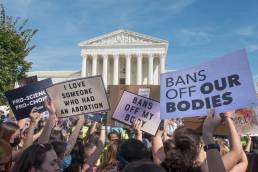
On this day 100 years ago in 1918, the Parliament (Qualification of Women) Act was passed which allowed women to become MPs for the first time – allowing them to sit and vote in the House of Commons.
This year, also marks the 100th anniversary of women’s suffrage. In 1918, the government also passed the Representation of the People Act, allowing women over the age of 30 who owned property to lawfully vote. This affected around 8.5 million women, but on a larger scale, it still only represented 40 per cent of the population of women in the UK.
Below you will find a series of WeAreTheCity guides, articles and interviews on the topic of womens’ rights. In addtion you can view our timeline ranging from how/when women secured the vote through to the representation of women in politics nowadays.
[gdlr_accordion style=”style-1″ initial=”1″]
[gdlr_tab title=”1832“]The Great Reform Act enfranchised ‘male persons’, explicitly barring women from voting.[/gdlr_tab]
[gdlr_tab title=”1881“]The Isle of Man grants votes to women[/gdlr_tab]
[gdlr_tab title=”1884“]An amendment to the Third Reform bill to give women the vote is rejected.[/gdlr_tab]
[gdlr_tab title=”1897“]Millicent Fawcett founded The National Union of Women’s Suffrage Societies (NUWSS). Members of this group were commonly referred to as Suffragists.[/gdlr_tab]
[gdlr_tab title=”1903“]The Women’s Social and Political Union (WSPU) was formed by suffragette Emmeline Pankhurt and her daughters, Christabel and Sylvia.[/gdlr_tab]
[gdlr_tab title=”1905“]The Suffragists begin their militant campaigning and famous slogans, such as ‘Deeds, Not Words’ and ‘Votes for Women’ are adopted.[/gdlr_tab]
[gdlr_tab title=”1908“]Women’s rights activists take part in a mass rally in Hyde Park. Faced with silence from Prime Minister Henry Asquith, suffragettes smash windows in Downing streets, and protestors chain themselves to railings.[/gdlr_tab]
[gdlr_tab title=”1910“]The Conciliation Bill, which would give women the vote, makes it through the House of Commons but Asquith does not carry it through.[/gdlr_tab]
[gdlr_tab title=”1913“]The Cat and Mouse Act was introduced as a response to force-feeding suffragette prisoners. The act allowed those on hunger strikes to be released until they were well enough to return to prison.[/gdlr_tab]
[gdlr_tab title=”8 June 1913 “]Emily Wilding Davison is killed after she steps in front of the king’s horse during Epsom Derby. It is thought she was trying to pin a suffragette badge onto the horse. [/gdlr_tab]
[gdlr_tab title=”4 August 1914 “]Britain declares World War. Women are called in to replace those fighting in traditional ‘men’s work’. [/gdlr_tab]
[gdlr_tab title=”6 February 1918 “]The Representation of the People Act is passed in Parliament, giving women over the age of 30 who owned property the legal right to vote.[/gdlr_tab]
[gdlr_tab title=”11 November 1918 “]Armistice is signed bringing the First World War to an end. The war effort undertaken by women is said to be the large deciding factor in women being given the vote.[/gdlr_tab]
[gdlr_tab title=”November 1918 “]The Parliament (Qualification of Women) Act 1918 was passed into law, allowing women to be elected into Parliament.[/gdlr_tab]
[gdlr_tab title=”1918“]The first woman, Constance Markievicz, is elected into Parliament. However, as a member of Sinn Fein, she did not take her seat.[/gdlr_tab]
[gdlr_tab title=”December 1919 “]The first woman takes her seat in Parliament. Nancy Astor held her seat until she stood down in 1945[/gdlr_tab]
[gdlr_tab title=”1928“]The Equal Franchise Act is passed in Parliament, extending the right to vote for all women over the age of 21 and giving them the vote on the same par as men.[/gdlr_tab]
[gdlr_tab title=”7 February 1971 “]Women in Switzerland are given the vote.[/gdlr_tab]
[gdlr_tab title=”1975“]Conservative MP, Margaret Thatcher becomes party leader after standing against Edward Heath.[/gdlr_tab]
[gdlr_tab title=”1979“]Margaret Thatcher is elected as Prime Minister, the first woman to hold the position.[/gdlr_tab]
[gdlr_tab title=”1 July 1984 “]Lichtenstein grants women the vote, the last country in Europe to grant women suffrage.[/gdlr_tab]
[gdlr_tab title=”20 November 2014“]Nicola Sturgeon assumes office as First Minister of Scotland and as the leader of the Scottish National Party (SNP). She is the first woman to hold either position.[/gdlr_tab]
[gdlr_tab title=”11 July 2016 “]Theresa May wins the Conservative leadership election, after former Prime Minister David Cameron resigned.[/gdlr_tab]
[gdlr_tab title=”13 July 2016 “]Theresa May becomes Prime Minister, becoming the second only woman in the role.[/gdlr_tab]
[/gdlr_accordion]
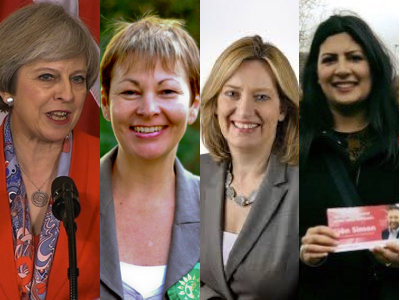 More than 200 women have been voted into the House of Commons, in a historic high for female MPs. The number of female MPs rose from 191 in the 2015 election and surpassed the 196 MPs elected during the course of the last parliament, including by-elections. There are now 207 women in Parliament, an increase of 10 as a result of the General Election.
What is the Representation of the People Act?
Pa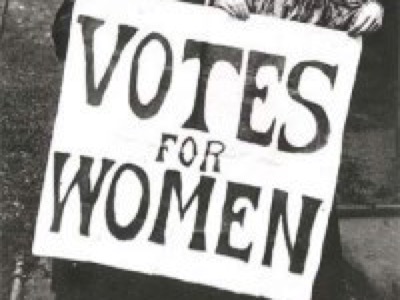 ssed in 1918 The Representation of the People Act was a fundamental piece of legislation that allowed many women to vote for the first time, and was viewed by the Suffragettes and Suffragists as a major hurdle in the ‘Votes for Women’ cause. The act allowed women over the age of 30 who owned property to lawfully vote.
This affected around 8.5 million women, but on a larger scale, it still only represented 40 per cent of the population of women in the UK.
Female leaders and the changing face of politics
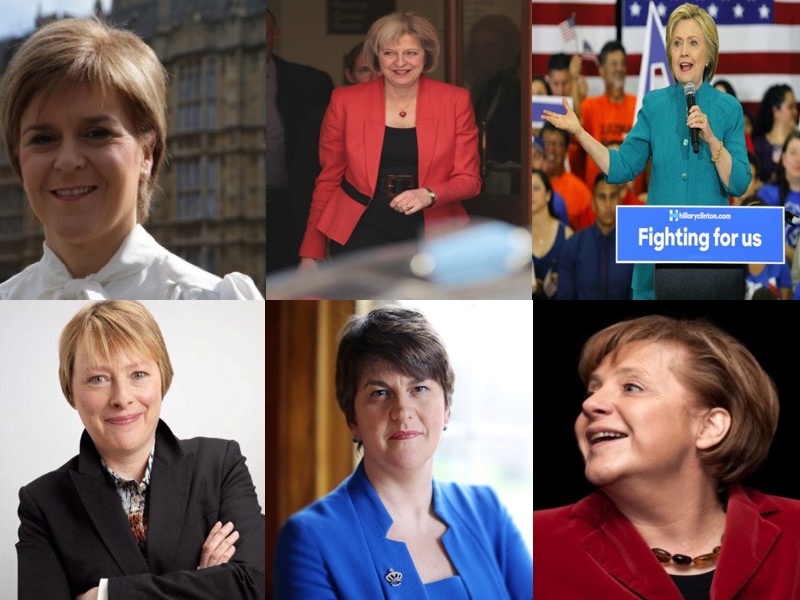 The face of British and international politics is changing and the future looks to include many more women. In this article, WeAreTheCity takes a glance at the influential women on the face of UK and global politics.
50:50 Parliament call for an equal government on 150th anniversary of first Suffrage petition
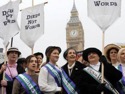 50:50 Parliament marked the 150th anniversary of the first Suffrage petition presented to Parliament by calling for more females to be represented at Westminster. On 7 June 1866, Millicent Fawcett, alongside female campaigners including Emily Wilding Davison and Elizabeth Garrett, presented a petition to the House of Commons calling for the female vote.
In June 20016 women only account for 192 of MPs represented in the Houses of Commons compared to 458 men. Since 1918, when women were allowed to become Members of Parliament, there have only ever been around 450 female MPs. This means that there are more men in Parliament today than there has ever been female.
Political parties urged to increase female representation to 45 per cent or face fines
UK political parties that fail to take steps to ensure at least 45 per cent of all Parliament representatives are female should be forced to do so or face fines, according to the Women and Equalities Committee.
Read the Commitees suggestions on making Parliament more gender balanced.
Female politicians suffer widespread sexual harassment and violence
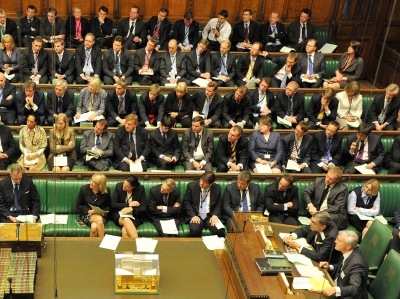 Female politicians across the globe suffer from widespread sexual harassment and violence, according to a study.
The study, conducted by the Inter-Parliamentary Union, found that a troubling level of MPs had experience psychological, sexual and physical violence.
Record numbers of women could make it to the House of Commons
 In May 2017 research, conducted by The Press Association, found that 200 women could earn a place in the House of Commons, if the Conservatives win nine more seats than in the 2015 General Election.
Read about the research here and how the PA drew this conclusion.
Suffragette: A celebration of women, created by women
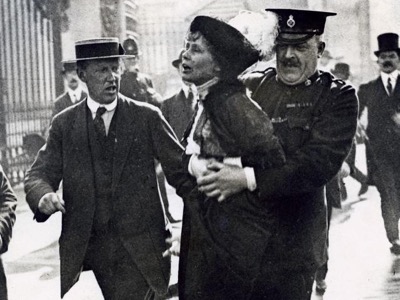 Released in 2015 the film Suffragette tells the story of the British women who fought to gain the vote and the struggle they underwent. WeAreTheCity reviewed the film and was invited to a special premiere for opening night in London.
Find out how the film was recieved.
Millicent Fawcett to be honoured with first statue of a woman in Parliament Square
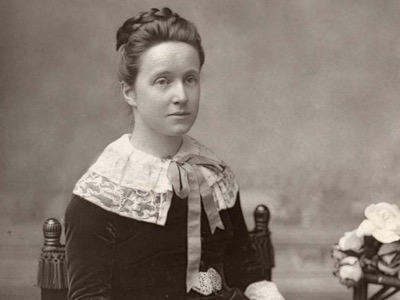 Millicent Fawcett, one of the leading figures in the campaign to win women the vote, will join the 11 other statues outside the Houses of Parliament.
The statue will form part of celebrations to mark the centenary of the Representation of the People Act 1918, which was introduced thanks to Fawcett’s campaigning and which first gave some women the right to vote.
Inspirational Woman: Dr Helen Pankhurst | An International Womens Day Special
 Dr. Helen Pankhurst has extensive experience in international development and campaigning on women’s rights.
She is also the great-granddaughter of Emmeline Pankhurst and granddaughter of Sylvia Pankhurst, leaders of the Suffragette Movement.
About the author
This guide was created by Kayleigh Bateman, Head of Digital Content at WeAreTheCity and Alison Fearn, Digital Content Editor at WeAreTheCity.